


Excavator Transport Between Phoenix and Las Vegas

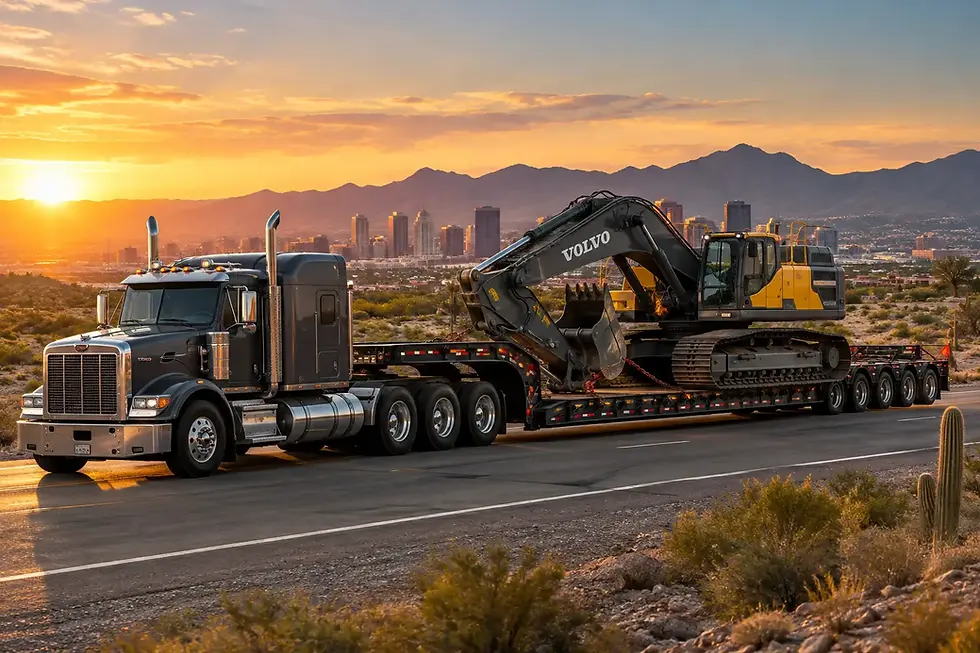
An excavator can make the Phoenix-to-Las Vegas run look simple on a map. In the field, excavator transport between Phoenix and Las Vegas is usually decided by machine dimensions, trailer deck height, axle weights, permit timing, and what waits at each end of the move. A machine that is legal on a standard lowboy may load and move quickly. One that is too tall, too wide, or too heavy can require a different trailer configuration, a permit review, escorts, and a route that avoids a bad clearance or restricted structure.
The key is to plan the move around the actual machine, not the equipment category on the dispatch sheet. “Excavator” could mean a compact unit on rubber tracks, a 30-ton machine with a standard boom, or a large Caterpillar excavator with a long-reach front, counterweight, and attachments. Those are completely different hauling decisions.
Start With the Machine, Not the Mileage
The roughly 300-mile distance is not normally the difficult part. The difficulty is determining the loaded dimensions and weight before selecting equipment or requesting permits. A model number alone is not enough. The transport plan should account for the operating weight, track width, boom position, counterweight clearance, overall loaded height, and every attachment traveling with the machine.
Customers often assume the bucket can stay pinned on because it is only one more piece of equipment. Sometimes it can. Sometimes removing it improves deck placement, lowers the loaded profile, and makes it possible to use a more efficient trailer. A wide bucket, hydraulic hammer, thumb, or coupler can change width and weight distribution enough to affect the permit application or axle spacing plan.
Long-reach excavators deserve separate attention. Their transport configuration may require boom removal, additional support, or a second load for the front and attachments. Trying to force a specialized machine into a standard transport setup can create clearance problems and slow down loading far more than a properly planned two-piece move.
Trailer Choice Controls More Than Price
A standard lowboy works well for many mid-size excavators, particularly when legal height and axle weights can be maintained. It is often the quickest option for a machine that can drive onto the trailer, sit low enough in the well, and remain within practical permit dimensions.
An RGN is often the better answer for heavier excavators or machines that need a lower deck and better weight distribution. Removing the gooseneck allows the excavator to load from the front rather than climb ramps. That reduces ramp angle and is useful for low-clearance machines, machines with limited ground clearance, or units that should not be driven up a steep rear ramp.
A multi-axle configuration becomes necessary when the machine weight and axle-group limits demand it. More axles are not automatically better. They add capacity and can spread weight across the load, but they also add length, operational complexity, and sometimes route limitations. The right configuration is the one that carries the excavator legally while still fitting the roads, loading areas, and permitted travel conditions.
Landoll tilt decks have a place in excavator transport, especially for smaller machines, attachments, and equipment that needs a controlled tilt loading method. They are not a substitute for a lowboy or RGN when a full-size excavator needs deck height reduction or substantial axle capacity. Trailer selection should follow the machine, not simply what happens to be available first.
Phoenix-to-Las Vegas Routing Is a Permit Decision
The usual corridor through Kingman and US-93 is familiar territory for Southwest heavy haul, but familiarity does not make every load routine. The permitted route depends on width, height, gross weight, axle weights, axle spacing, and current restrictions. Roadwork, bridge work, lane closures, and municipal access at either end can change the workable plan.
Height deserves particular scrutiny. An excavator that appears acceptable at the yard can become a problem after it is loaded, chained, and positioned over a trailer well. Boom placement, cab guard height, GPS masts, exhaust stacks, and the trailer’s loaded suspension all matter. Experienced crews measure the loaded height instead of relying on a brochure specification or an estimate from the ground.
Oversize permits are not a last-minute paperwork step. They shape when the load can move, the route it can take, and whether escorts are required. Arizona and Nevada permit requirements can differ, and city restrictions near Phoenix or Las Vegas may matter as much as the highway segment. A move scheduled for an early-morning jobsite delivery may need to account for urban traffic windows, local access restrictions, and the time required to unload safely.
One mistake contractors make is assuming a permit can be handled after the truck is dispatched. If dimensions or weights trigger permit requirements, the correct information needs to be in hand before the route and delivery appointment are committed. A rushed permit correction can turn a same-day move into a delayed machine start.
Loading Conditions Can Change the Entire Plan
The loading location is often where a good transport plan either holds together or falls apart. An excavator needs firm, reasonably level ground for loading, securement, and trailer departure. A lowboy or RGN cannot work effectively when the approach is deeply rutted, soft from irrigation, blocked by stored materials, or too tight for the tractor to line up.
At an active Phoenix jobsite, the issue may be limited staging space or traffic control around the entrance. At a Las Vegas project, it may be a constrained industrial yard, casino-area delivery restriction, or a site superintendent who needs the machine delivered before crews occupy the access road. These details should be discussed before the truck arrives, not while the operator is looking for a place to turn around.
The machine itself needs to be ready. Fuel should be at a practical level, loose material should be cleaned from tracks and undercarriage, and the cab should be secured. The boom and stick must be positioned for the intended trailer configuration. Any known leaks, weak travel motors, dead batteries, or loading concerns should be disclosed early. A machine that cannot travel under its own power may require a winch plan or a different loading method.
Attachments should also be staged where they can be loaded without trapping the excavator or blocking access to securement points. If the bucket, thumb, and hammer are moving separately, their weights and dimensions still count. Treating attachments as an afterthought is how a legal machine turns into a complicated load at the gate.
Schedule for Productive Time, Not Just Transit Time
The truck may cover the highway miles in a workday, but the total move includes dispatch, equipment positioning, loading, securement, permit compliance, travel restrictions, unloading, and return access. For a time-sensitive project, the question is not simply, “Can it get there tomorrow?” The better question is, “When can the excavator be safely released for work at the destination?”
A late-afternoon pickup can make sense if the machine is staged, permits are in place, and delivery conditions support the timing. It can also create avoidable downtime if legal travel hours, escort availability, or destination access force the load to sit overnight. The lowest quote is not always the least expensive move when an excavation crew, operator, and support equipment are waiting on one machine.
Clear communication reduces that risk. Provide the machine make and model, serial number if available, transport weight, attachment list, pickup and delivery contacts, site hours, exact access conditions, and any required delivery time. Photos of the machine and both loading areas are often more useful than a verbal description, especially when there is a question about boom configuration, clearance, or turning room.
Flat Out Services plans these moves as equipment moves first and highway moves second. That distinction matters on a corridor where a few inches of height, one additional axle group, or an unprepared jobsite can determine whether the excavator arrives ready to work.
Before releasing an excavator for transport, confirm the loaded dimensions, the trailer type, permit status, site access, and unload timing with the hauler. That short planning step protects the schedule far better than trying to solve a trailer, route, or access problem after the machine is already down for the move.


Comments