


How to Plan RGN Loading for Heavy Equipment

An RGN can make a difficult machine move practical, but only when the loading plan is built around the actual machine, route, and jobsite. Knowing how to plan RGN loading means more than confirming that an excavator will fit on the deck. The real work is determining loaded dimensions, axle weights, loading sequence, permit needs, clearance risks, and whether both ends of the move can safely handle the trailer.
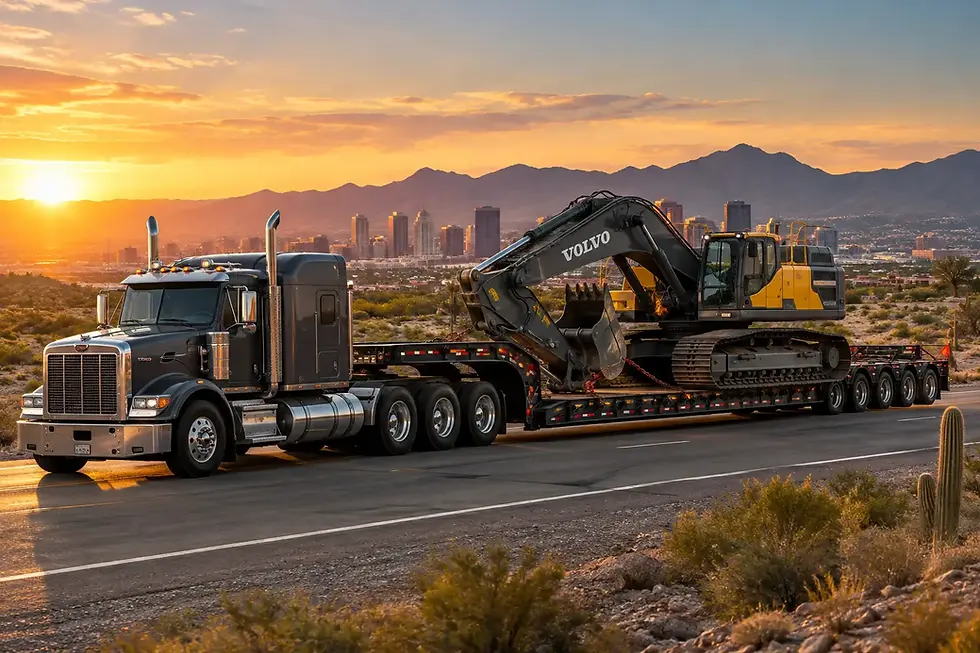
A contractor may look at a 70,000-pound excavator and see a straightforward lowboy move. An experienced heavy haul planner sees questions: Is the boom tucked within legal or permitted length? Does the track width require oversize permits in every state on the route? Is the machine balanced on the deck? Can the receiving site accommodate a tractor and detachable gooseneck without blocking active work? Those answers determine whether the move goes cleanly or creates delays at the gate, on the highway, or at the unload point.
Start RGN loading with the machine's real transport dimensions
Do not plan from a sales brochure or a machine class alone. A Cat 336, for example, can have very different transport measurements depending on the boom, stick, bucket, counterweight, track pads, guarding, and attachments installed. The dimensions that matter are the dimensions after the machine is configured for transport.
Measure overall width, height, length, operating weight, and axle placement points. For tracked equipment, identify the distance from the front and rear of the tracks to the machine's center of gravity. For wheeled equipment, confirm axle spacing, tire condition, and whether the machine can be driven onto the deck. Attachments need their own plan. A bucket left on an excavator can add length and change how the boom must be positioned. A blade, ripper, or wide counterweight can affect both width and weight distribution.
One mistake contractors make is reporting a machine's bare shipping weight while leaving a bucket, hydraulic hammer, grade-control hardware, full fuel tank, or aftermarket guarding installed. That may not sound significant, but it can move a load into a different permit category or overload an axle group. Scale tickets and manufacturer data are useful starting points, but experienced haulers confirm the equipped transport weight before committing to a trailer configuration.
Match the RGN configuration to weight and geometry
An RGN is not one fixed trailer. Deck length, well depth, number of axles, axle spacing, and rear booster options all change what the unit can legally and practically carry. The right configuration is driven by axle weights first, then by deck fit and route restrictions.
A standard detachable lowboy may be the efficient choice for a dozer or excavator that fits the well and can be loaded low enough to manage bridge and overhead clearances. A longer stretch RGN may be needed for a paving spread or crawler crane components. A multi-axle setup can distribute a heavier load legally, but it also adds trailer length, turning radius, permit requirements, and jobsite access concerns.
More axles do not automatically make a move easier. A 9-axle combination may solve a weight problem, but it can be a poor fit for a tight Phoenix jobsite, an older mine road, or a receiver with limited turning room. The trailer has to make the route and get into the site, not just carry the machine on paper.
Deck placement matters as much as trailer capacity. Equipment loaded too far forward can put excessive weight on the tractor drives and steer axle. Too far rearward can overload the trailer group or reduce fifth-wheel weight enough to hurt traction and handling. On a detachable trailer, the machine must also clear the gooseneck transition, deck edges, and rear axle area. Low ground clearance is a common issue with pavers, crushers, and certain industrial skids. Sometimes a different trailer type, such as a Landoll tilt deck, is safer for the loading conditions even when the RGN has adequate rated capacity.
Build the permit and route plan before setting the pickup time
Permits are not paperwork to deal with after dispatch. They shape the loading configuration and schedule. Width, height, length, gross weight, axle weights, axle spacing, and travel days can all affect the permit route. An RGN plan that works for an Arizona intrastate move may need changes before crossing into Nevada or California.
The route has to be evaluated for practical restrictions, not just highway mileage. Interstate corridors such as I-10, I-17, I-40, and US-93 often provide the room needed for heavy equipment moves, but the first and last miles cause many of the problems. Bridge postings, low utility lines, narrow access roads, sharp subdivision entrances, railroad crossings, soft shoulders, and construction-zone lane restrictions all matter.
Height deserves special attention. A machine may fit under a posted bridge on a normal route, but the actual loaded height can change with tire pressure, suspension position, track shoe buildup, or deck height. Contractors also need to think about unmarked jobsite obstacles. A low-hanging service drop or a temporary site sign can stop a load even after the highway portion is complete.
For larger loads, permit lead times, approved travel windows, holiday restrictions, and escort requirements need to be decided before crews are waiting at the pickup. Flat Out Services plans these details around the actual route and trailer arrangement because an avoidable permit revision can cost more than the extra planning time upfront.
Prepare the machine for a controlled load
The best loading plan can still fail if the machine arrives unprepared. The operator and hauler should agree on configuration before the trailer is spotted. That includes removing loose material, securing cab doors and panels, retracting or folding components where appropriate, and confirming the machine can move under its own power.
For excavators, the boom and stick position should be planned for transport balance and legal length, not simply folded in the fastest way. The bucket may need to be removed, pinned, or loaded separately. Dozers may require blade and ripper adjustments to meet length limits and prevent contact with the deck. Wheel loaders need their articulation locked as required and buckets set in the planned travel position.
Fuel is a tradeoff. Draining a tank may reduce enough weight to help an axle calculation, but the machine still has to be safely operated at both ends. The answer depends on the weight margin, distance, refueling availability, and manufacturer guidance. The same applies to attachments. Removing a bucket or tool can reduce dimensions, but it creates a second piece that must be loaded, secured, and accounted for at delivery.
Tie-down planning starts before the machine climbs onto the deck. Securement points must be accessible once the machine is positioned, and chains need proper angles to restrain forward, rearward, and lateral movement. A load that fits tightly against a trailer component is not necessarily easier to secure. In some cases, a few inches of planned spacing makes it possible to inspect chains, protect hydraulic lines, and properly tension binders.
Confirm the loading surface and the jobsite sequence
An RGN needs room to detach, load, reconnect, and leave. That sounds obvious until a jobsite is active, muddy, sloped, or crowded with material deliveries. The ground must support the tractor, gooseneck, and machine during loading. Soft dirt can let the trailer settle out of alignment. A steep approach can create a high-center point or cause a low-clearance machine to drag before it reaches the deck.
The ideal loading area is level, firm, and long enough to keep the operation straight. It should also be separated from foot traffic, other equipment, overhead hazards, and active production. If a site cannot provide that, the move may still be possible, but the plan may require matting, grading, a different loading location, or a different trailer.
At the delivery site, the sequence matters. Ask who will receive the machine, where it will be parked, whether the operator will be present, and what equipment is moving around the unload area. A trailer arriving at a mine or paving project with no clear unload lane can lose hours even when every highway permit is correct.
The strongest RGN loading plan is usually the one that identifies the difficult part before the truck rolls. Give the hauler accurate machine information, current site photos, pickup and delivery access details, and the real deadline. That allows the trailer, axle configuration, permits, and loading method to be chosen for the move you actually have, not the simpler move everyone hoped it would be.


Comments