


Construction Equipment Shipping Guide
- Flat Out Services
- Jun 5
- 6 min read

A machine can be ready to work, the crew can be scheduled, and the site can be open - but if the haul is late, the whole job slips. That is why a solid construction equipment shipping guide matters. Moving iron is not just about getting from one point to another. It is about matching the right trailer, the right route, and the right permit plan to the equipment you actually need on site.
For contractors, dealers, and project teams, the biggest mistakes usually happen before the truck ever rolls. A load gets quoted off a bad weight estimate. The machine is measured with the boom in the wrong position. Someone assumes a standard lowboy will work when the job really needs an RGN or a multi-axle setup. Those details decide whether a move goes clean or turns into a delay.
What this construction equipment shipping guide needs to cover
Construction equipment shipping is part logistics, part compliance, and part field execution. The machine itself is only one piece of the job. The rest is how that machine sits on the trailer, what the total legal dimensions look like, which states are involved, and how delivery lines up with the site schedule.
That is why there is no single answer for every move. A compact skid steer going across town is a different haul than a 80,000-pound excavator crossing multiple states. One can often move with basic planning. The other may require route surveys, oversize permits, escort coordination, and a trailer designed for concentrated weight.
If you are hiring a carrier, you want them asking the right questions up front. Exact make and model. Operating weight. Overall dimensions in transport position. Whether buckets, forks, blades, or attachments ship separately. Pickup and delivery site conditions matter too, especially on undeveloped jobsites where ground conditions and access can change the trailer choice.
Start with the machine, not the rate
A cheap quote based on bad information is not cheap for long. The right process starts with the equipment profile. That means confirmed dimensions, actual weight, and a realistic loading plan.
Weight is the obvious one, but deck height and axle placement matter just as much. An excavator may fit weight-wise on more than one trailer, but boom position, stick placement, and tail swing can change overall height and length in a hurry. A wheel loader with a bucket attached may push dimensions past what was expected. A dozer with a wide blade can create permit issues even when the weight is manageable.
This is also where shipping one piece versus partial disassembly becomes a trade-off. Taking off a bucket, counterweight, or attachment can reduce height or width and simplify permitting. But tear-down and reassembly cost time and labor. On a tight project schedule, it may make more sense to move the machine mostly intact with the proper trailer and permit package.
Choosing the right trailer for the load
Trailer selection is where experience shows. The right trailer keeps the load legal where possible, lowers risk during loading, and avoids unnecessary handling.
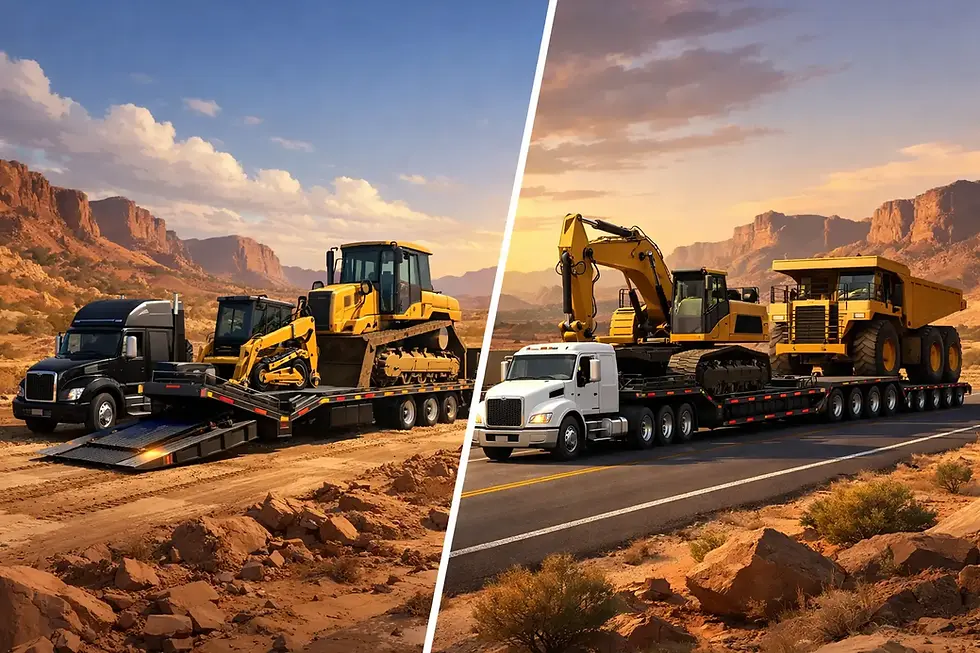
A lowboy is a common fit for taller, heavier construction equipment because the deck sits lower than a standard trailer. That lower deck can make the difference between a legal-height move and a permit-heavy one. For many excavators, loaders, rollers, and smaller dozers, a lowboy is the practical starting point.
An RGN is often the better answer for larger machines because the front detaches and lets the equipment drive on from ground level. That makes loading safer and more controlled for heavy tracked equipment. It also helps with weight distribution on bigger loads that need serious axle capacity.
A Landoll tilt deck can be the right tool for certain machines, especially when pickup or delivery conditions call for flexibility. Step decks work for some attachments or lighter equipment, but they are not the answer for every piece of iron. When loads push well beyond standard limits, a multi-axle configuration comes into play. That is not overkill. It is how you spread weight legally and protect the schedule.
Permits, routing, and why legal matters more than fast
Everybody wants the machine delivered fast. But legal comes first, because illegal loads create the kind of delay that wrecks schedules.
Oversize and overweight permits vary by state, and the rules are not uniform. Width, height, gross weight, axle spacing, travel hours, weekend restrictions, holiday blackouts, and escort requirements all shift depending on where the load is moving. A route that looks shortest on a map may be the wrong route for bridge limits, overhead restrictions, or city restrictions.
In the Southwest, timing and route planning matter even more than some buyers expect. Arizona and Nevada can offer strong freight corridors, but metro areas, desert stretches, mountain grades, and heat all affect planning. A carrier that regularly works Phoenix, Kingman, Las Vegas, and surrounding lanes will usually spot route issues faster than someone trying to patch the move together from a desk.
This is one reason direct carrier service matters. When the same company handles the trucks, trailers, routing, permits, and driver communication, there is less room for disconnect. You do not want permit assumptions being made by one party and field decisions being made by another.
Loading and securement are where jobs go right or wrong
A lot of people talk about transport as if the haul starts once the truck pulls out. In reality, many problems start during loading.
The machine has to be positioned correctly for axle weights, transport height, and securement. Too far forward or too far back changes the load balance. A boom, arm, bucket, or blade needs to be lowered and secured for transport, not just parked in a way that looked good in the yard. Attachments may need separate chains, blocking, or even separate transport depending on size and configuration.
Securement is not just a compliance box. It protects the equipment and everybody around it. Tracked machines, wheeled machines, attachments, and irregular industrial assets all need different tie-down approaches. The right carrier treats securement like part of the job, not an afterthought once the machine is on deck.
Site conditions matter too. Tight gates, soft dirt, uneven grades, and limited approach room can complicate loading and unloading. A clean plan includes not just the highway portion but the first and last 100 feet.
What drives cost on construction equipment shipping
Rates move for a reason. Distance matters, but distance alone does not tell you much.
The biggest cost drivers are machine size, weight, trailer type, permit complexity, route difficulty, and how tight the schedule is. A legal piece on a common trailer with easy access points is usually straightforward. A heavy or over-dimensional load that needs permits in multiple states, escorts, and a specialized trailer is a different job entirely.
Pickup and delivery windows can push cost up too. If a site only unloads at certain hours, or if the machine has to hit a narrow project window, the carrier may have to stage equipment or dedicate capacity around that slot. That is real cost. So is waiting time caused by machines not being ready, missing loading assistance, or paperwork not lined up.
The best way to control cost is not beating up the rate. It is getting the details right early. Accurate information prevents rework, permit changes, and trailer swaps.
Common mistakes this construction equipment shipping guide can help you avoid
The most common mistake is underestimating the machine. That could mean stale spec sheets, guessed weights, or dimensions measured in a non-transport position. Another mistake is treating the move like general freight. Construction equipment is not palletized cargo. The trailer, route, and loading process are all part of the service.
A third mistake is buying through too many layers. When brokers stack on brokers, communication slows down and accountability gets fuzzy. If there is a permit issue, a route change, or a site problem, you need direct answers from the people responsible for the move.
It also helps to think beyond pickup date. Ask when permits will be filed, what trailer is assigned, whether escorts are likely, and what the delivery site needs to be ready for unloading. A serious hauler should be able to talk through that without sugarcoating it.
What to have ready before you book
Before you schedule a move, have the machine make and model, confirmed transport dimensions, operating or shipping weight, photos, attachment details, and site contacts ready. If there are access limitations, mention them early. If the site has crane activity, restricted hours, or dirt approaches that affect unloading, say so before dispatch.
Good information shortens the timeline and lowers the chance of surprises. It also gives the carrier a better shot at assigning the right equipment on the first pass. Companies like Flat Out Services build their reputation on that kind of execution - direct communication, the right trailer, and no guesswork layered into the haul.
Construction schedules rarely leave room for transport mistakes. The machine needs to show up safe, legal, and ready for work. If your carrier plans the move like an operation instead of a pickup, you are already ahead of the problem.


Comments