


Komatsu PC490 Transport Arizona Planning

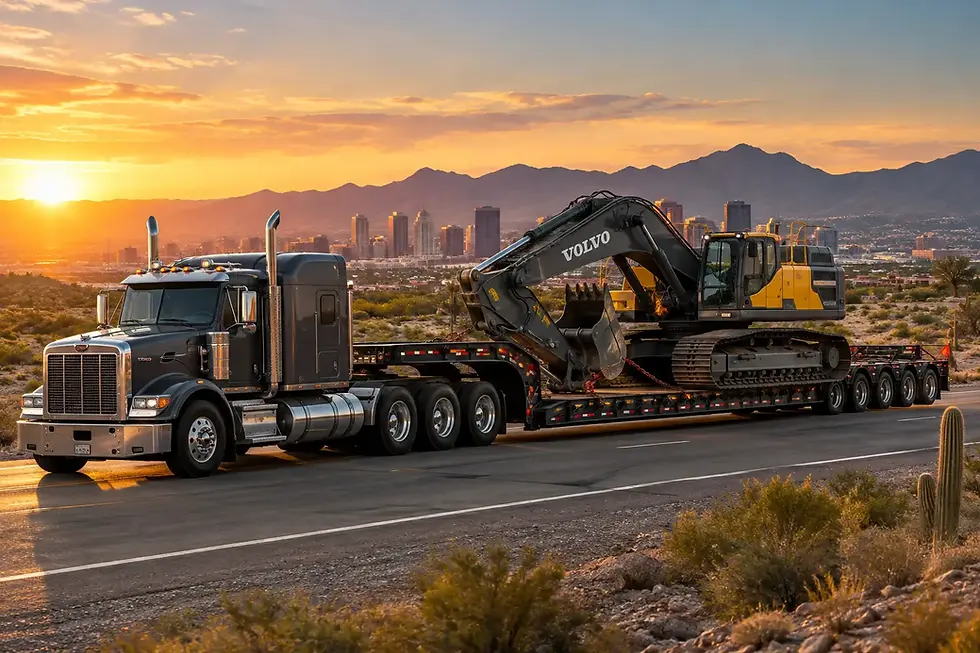
A Komatsu PC490 is not a machine you book on a standard lowboy and hope fits the permit. Komatsu PC490 transport Arizona starts with the actual machine configuration, not the model number on the work order. A PC490 can land in a very different transport category depending on its boom and stick, counterweight, guard package, bucket, quick coupler, auxiliary plumbing, and whether it is carrying mining or demolition protection.
For a contractor, the difference matters because the wrong plan can turn a scheduled overnight move into a multi-day delay. The machine may physically fit on a trailer but still create axle, height, route, or jobsite problems that were never addressed before the truck arrived.
Komatsu PC490 Transport Arizona Starts With Verified Dimensions
The PC490 is generally a 100,000-pound-class excavator before transport attachments and configuration differences are fully accounted for. That is enough weight to require a serious axle plan, but weight alone does not decide the equipment. Transport height, overall loaded length, axle spacing, and center of gravity all matter.
One mistake contractors make is providing the base operating weight from a brochure and assuming it is enough for dispatch. A machine fitted with a hydraulic quick coupler, large bucket, guarding, rock protection, or a long-reach setup can change the transport plan substantially. The hauler needs the serial-number-specific configuration or, at minimum, clear photos and measurements of the excavator as it will be loaded.
Before a move is scheduled, confirm the machine's transport length with the boom lowered and stick positioned for travel, its width over the tracks, cab height, counterweight clearance, attachment dimensions, and actual weight. If the bucket comes off, confirm where it will ride. A bucket that is placed carelessly on the deck can add length, shift weight toward the rear axle group, and complicate securement.
This is also the point to identify what can and should be removed. Pulling the bucket is common when it improves length and loading clearance. Removing the counterweight or boom is a different decision. It can reduce weight and dimensions, but it adds labor, lifting requirements, reassembly time, and risk of delaying the receiving jobsite. It makes sense only when the route, permit category, or trailer capacity justifies the extra work.
Trailer Choice Is an Axle Decision
For many PC490 moves, a detachable gooseneck RGN or a multi-axle lowboy is the practical starting point. The detachable neck allows the excavator to be driven onto the deck at a low angle, which is often safer and faster than trying to load it over ramps. It also gives the transport team more control over deck height and the machine's loaded position.
A fixed-neck lowboy can work on the right configuration, especially for a straightforward machine with manageable height and a suitable loading area. But it is not automatically the lower-cost choice once field loading complications are considered. If a jobsite has limited room, poor ramp approaches, or a machine that cannot safely climb the trailer angle, the apparent savings disappear quickly.
The trailer must distribute the excavator's weight across legal axle groups, not merely carry the gross weight. That is why experienced heavy-haul planners look at where the PC490 will sit on the deck and how its center of gravity transfers weight to the tractor, jeep, trailer axles, and, when required, a booster. Moving the excavator forward or back by a few feet can materially change axle readings.
A heavier configuration may require additional axles or a larger multi-axle setup. In some cases, a nine-axle combination is the right answer for axle loading and permit compliance. In others, it is unnecessary complexity that increases cost, turning radius, route restrictions, and loading time. More axles are not automatically better. The goal is the lightest legal, stable configuration that can run the approved route without creating avoidable operational problems.
Permits and Routing Are One Plan
Arizona oversize permits are not a paperwork task that happens after a truck is assigned. The permit dimensions, axle configuration, and approved route are tied together. A route that works for a lower, shorter RGN setup may not work for a taller arrangement or a combination that needs more room to turn.
This is especially relevant on Arizona corridors where a move may leave a Phoenix equipment yard, run north on I-17, connect through Kingman, or travel along I-40 toward Northern Arizona or Nevada. Interstate routes can be efficient, but interchange geometry, construction zones, bridge limitations, lane restrictions, and local access roads still need to be checked. The last five miles from the highway to the jobsite often create more difficulty than the long highway portion.
Customers sometimes assume a permit means every issue has been cleared. It does not. A permit authorizes a particular load on a particular route under listed conditions. It does not make a low utility line higher, widen a narrow plant entrance, eliminate a sharp turn, or guarantee access through an active paving operation.
Route planning should account for the loaded height at the highest point of the excavator, not just published machine height. It should also account for required escorts, travel-hour restrictions, holiday limitations, and municipal rules near the pickup or delivery point. If the PC490 is headed to a mine, quarry, solar site, or remote civil project, confirm the access road's width, surface condition, grades, and turnarounds before the truck is rolling toward the gate.
Prepare the Excavator for a Clean Load
A ready machine saves more time than a rushed truck appointment. The excavator should be fueled only to the level appropriate for the move, with unnecessary loose material removed from the cab and body. The owner should verify that the travel motors work, the machine can be positioned safely, and no hydraulic or coolant leak will create a loading issue.
The boom and stick need to be positioned as agreed during planning. A different boom position at pickup can change the loaded length and interfere with the trailer neck, deck, or securement plan. The attachment should be removed before the truck arrives if it is not traveling with the machine, unless lifting support and a staging area have been confirmed.
Securement is more than putting chains on the tracks. The transport crew needs accessible tie-down points, proper chain angles, protection where needed, and a loaded position that prevents movement under braking or on uneven roads. The boom, stick, and bucket or attachment must also be restrained so they cannot settle or shift during transit.
Ground conditions deserve the same attention. An RGN needs space to detach and reconnect, and a loaded heavy-haul combination needs firm ground to avoid sinking, binding, or getting trapped in a tight staging area. Soft desert soil, fresh aggregate, or an active site with equipment parked along the only access lane can turn a simple load into a recovery problem.
Schedule Around the Work, Not Just the Truck
The best pickup window is not always the earliest one. A PC490 may need to finish a cut, be cleaned, have an attachment removed, or wait until another machine clears the loading area. At delivery, the receiving crew needs room to unload, a qualified operator, and a clear plan for where the excavator will go after it comes off the trailer.
That matters on active projects where the haul truck may have limited access between concrete pours, paving operations, shift changes, or mine traffic. A driver cannot simply stop in a travel lane and wait for someone to decide where the machine should unload. Early coordination prevents detention, avoids unsafe backing, and protects the schedule of the crews already working on site.
At Flat Out Services, the planning conversation for a PC490 move focuses on the machine as it sits, the trailer that will carry it, and the actual roads and jobsite conditions involved. That is the difference between pricing a load and planning one.
Before committing a Komatsu PC490 to transport, send the hauler current photos, full configuration details, pickup and delivery access notes, and the required delivery window. Those few details give the transport team what it needs to build a legal plan that arrives ready to work, rather than a truck that arrives ready to troubleshoot.


Comments