


What Permits Does Oversized Equipment Need?

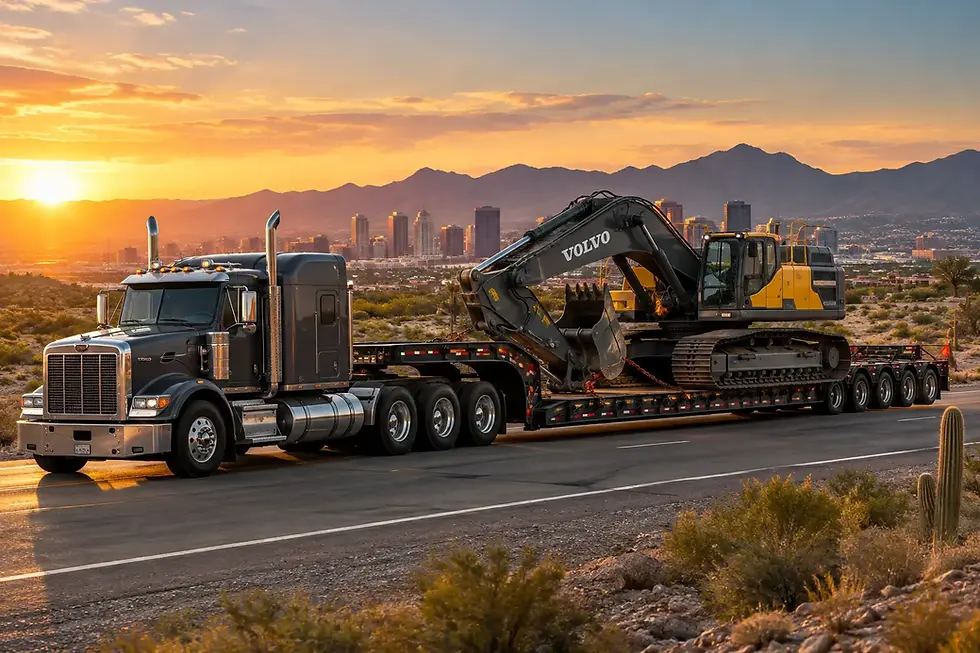
A 90,000-pound excavator may look like a straightforward lowboy move until its boom height, track width, axle spacing, and destination road are put on paper. That is when the real question becomes: what permits does oversized equipment need for this exact truck, trailer, route, and travel window? The answer is rarely one permit and never just a matter of the machine's published weight.
For Southwest heavy haul, permits are built around the complete loaded configuration. A transport manager needs the machine dimensions, actual shipping weight, trailer deck height, axle count and spacing, route, and pickup and delivery access before deciding what to apply for. Change the trailer from a standard lowboy to an RGN or add a jeep and booster, and the permitted configuration may change with it.
The permit starts with the loaded dimensions
An oversize permit authorizes travel beyond a state's standard legal size limits. In practical terms, agencies look at overall width, height, length, front and rear overhang, and sometimes the way a component is secured. A tracked excavator with 11-foot-6-inch wide tracks creates a width issue. The same machine with its boom resting higher than expected can create the more serious problem: an overheight route restriction.
Height deserves more attention than it often gets. Width can trigger travel restrictions and escorts, but excessive height can eliminate an otherwise efficient route because of bridges, signal structures, utility lines, or railroad crossings. Dropping a machine onto a lower RGN well may cost more than using a basic lowboy, but it can avoid a bridge survey, utility coordination, a long reroute, or a permit denial. That is an operational decision, not a trailer preference.
Length can be just as relevant for cranes, paving spreads, long attachments, and industrial components. A machine may fit within legal width and height but still require an overlength permit because of a blade, stick, boom section, or rear overhang. Folding, removing, or separately hauling an attachment can reduce permit complexity, though it adds loading time and another piece to manage at the jobsite.
Overweight permits depend on axle configuration
A load can be legal in overall gross weight and still be illegal on a specific axle group. This is why a permit application is not complete without accurate axle weights and spacing. Agencies evaluate how the weight is distributed across the tractor, trailer, and any additional axle groups.
A 9-axle configuration can make a heavy dozer, scraper, or wheel loader practical to move where a lower axle-count setup cannot. More axles distribute weight, but they also add equipment cost, turning-radius constraints, loading complexity, and route considerations. The right answer depends on the load and the roads, not simply on the heaviest trailer available.
Customers sometimes assume a permit allows any weight as long as fees are paid. It does not. The state may set maximum permitted axle weights, gross weights, bridge formulas, or route-specific restrictions. Certain bridges, older structures, and local roads may carry lower limits than the highway leading to them. A permit can require a different axle setup, a restricted route, or a separate engineering review before the move is approved.
For construction and mining moves, actual weight matters more than brochure weight. Guards, counterweights, buckets, attachments, fuel, mud buildup, and aftermarket protection can materially change the shipping figure. We have found that estimating a machine's weight from a model number alone is one of the fastest ways to create a permit revision or a bad dispatch day.
State permits are only part of the plan
Most oversized equipment moves require a state-issued oversize or overweight permit for each state entered. A move from Phoenix to Las Vegas may involve Arizona and Nevada permits, while an Arizona-to-Southern California move also needs California authorization. Each state has its own application process, operating hours, escort thresholds, signage requirements, and route rules.
The state permit does not automatically cover city streets, county roads, private industrial roads, or jobsite access. Local jurisdictions may require separate permits, particularly when a route leaves the state highway system, crosses a restricted structure, or requires temporary traffic control. The last miles into a mine, solar site, refinery, or urban project can be harder to clear than the interstate portion.
That is why route planning starts at the gate, not at the nearest highway interchange. A dispatcher needs to know where the machine can be staged, whether the access road will support the axle loading, where the truck can turn, and whether overhead lines, trees, gates, or parked equipment narrow the path. If a Landoll tilt deck or lowboy cannot safely enter the delivery point, a valid highway permit does not solve the problem.
Common permit documents and approvals
The paperwork varies by move, but a properly planned heavy-haul shipment may involve:
State oversize permits for excessive width, height, length, or overhang
State overweight permits based on gross weight, axle weights, and axle spacing
Route-specific approvals for bridges, restricted highways, or special structures
City or county permits for local roads and urban travel
Utility coordination or lift approvals when clearance is tight
Pilot car requirements, law-enforcement escorts, or traffic-control plans when required
Not every move needs every item. A 10-foot-wide skid steer on a tilt deck is a different permit exercise from a 14-foot-wide mining loader on a multi-axle trailer. Treating both as “oversize” misses the details that determine cost, lead time, and legal travel windows.
Escort requirements are driven by the permit, not preference
Pilot cars are often required when width, length, height, or route conditions exceed a state's threshold. Depending on the move, the permit may require a front escort, rear escort, both, or law enforcement at specific points. Escorts help warn traffic, monitor clearance, control difficult turns, and communicate road hazards to the truck driver.
An escort requirement also changes scheduling. Oversize loads may be restricted to daylight, prohibited during commuter periods, or barred from travel on certain holidays and weekends. Urban routes around Phoenix, Las Vegas, or Southern California can have tighter time restrictions than open highway corridors. A load may be physically ready at 6 a.m. but unable to legally roll until a permitted window opens.
One mistake contractors make is scheduling crews and cranes around the estimated drive time without accounting for permit timing. Loading delays, a required daylight cutoff, weather restrictions, or a closed route segment can push delivery into the next legal travel period. For a crane setup or paving operation, that can put labor and rented support equipment on standby.
Equipment preparation affects permit compliance
Permitting is easier when the machine is prepared for transport before the truck arrives. Remove loose buckets, rippers, counterweights, extensions, and detachable attachments when doing so reduces dimensions or improves securement. Fold mirrors, lock articulation points, secure booms and blades, and confirm the unit can be loaded without creating unexpected height.
Preparation should also include clean, readable serial and model information, accurate dimensions, and notice of non-running conditions. A non-running loader may require a winch-capable setup or jobsite support to load. A crawler crane component may need separate pieces because a fully assembled configuration exceeds route limits. The permit strategy and loading plan have to agree.
For wide equipment, the transport team also needs to decide whether the machine should travel intact, with components removed, or on a different trailer. Removing a blade may eliminate escorts but add disassembly, reassembly, and downtime. Keeping it intact may be faster at the jobsite but require a more expensive permitted move. Neither option is automatically better.
Build permit time into the move, not after dispatch
Routine permits can sometimes be obtained quickly, but complicated overweight, overheight, multi-state, or route-specific moves need more lead time. Permit offices may require revised axle diagrams, route changes, or additional review. Utility work, bridge analysis, and local approvals can take longer than the truck availability discussion.
At Flat Out Services, the useful starting point is the equipment model, transport weight, dimensions in shipping configuration, pickup and delivery addresses, requested delivery date, and any site-access constraints. From there, the trailer and axle configuration can be matched to the permit strategy instead of forcing a permit around a bad equipment choice.
Before committing a machine to a delivery date, get the route and permitted configuration checked as one plan. The permit is not paperwork added after the move is sold. It is the document that determines how the load can legally reach the jobsite.


Comments