


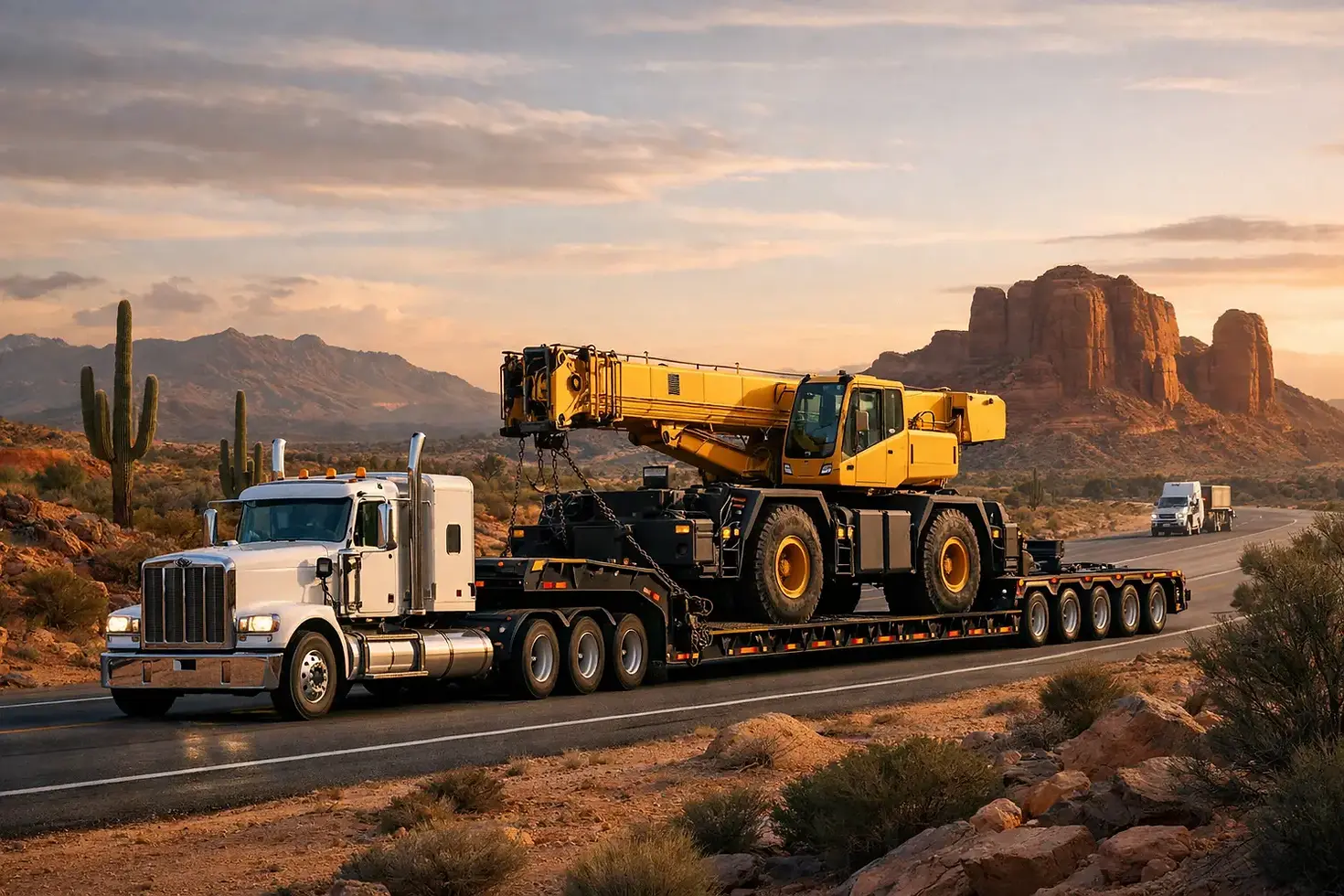
RT Crane Transport Arizona for Planned Moves
- Flat Out Services
- Aug 1
- 6 min read

An RT crane can look like a straightforward haul until the transport plan reaches the details: boom position, counterweight removal, tire width, axle weights, travel height, and the actual entrance to the next job. RT crane transport Arizona is not a matter of putting any rough-terrain crane on the first available lowboy. The right plan starts with the specific crane configuration and ends with a legal, workable unload at the receiving site.
For contractors, a crane move is often tied directly to crews, picks, concrete placements, steel work, or shutdown windows. A truck arriving late is expensive. A truck arriving on time with a trailer that cannot get into the site is no better. That is why experienced heavy haul planners build the move around the machine, the route, and the jobsite as one operation.
Start With the RT Crane's Transport Configuration
The model number alone does not provide enough information to price or plan a move. A Grove RT530E, for example, is a different transport problem than a larger RT9130E, and either crane may have a different actual weight depending on installed counterweights, boom extensions, hooks, mats, and onboard accessories. Manufacturers publish base weights, but the truck needs the travel-ready weight and dimensions of the crane being loaded.
The first questions should be practical ones: Can the boom be fully lowered and secured? Are counterweights coming off? Is the swing-away jib stowed or removed? Are all outrigger beams retracted? Is the crane roadable under its own power from the staging area to the trailer, or does it need assistance? Those answers determine deck length, loaded height, axle loading, and how much time the loading crew needs.
One mistake contractors make is assuming the crane is ready because it finished work that afternoon. A crane may still have rigging, loose blocks, hydraulic attachments, cribbing, or removable components that need to be accounted for before the truck arrives. Loose gear is not just a securement issue. It can change the permitted dimensions or require a separate support vehicle.
Trailer Choice Is About More Than Capacity
A standard lowboy can be the right tool for a smaller RT crane that loads cleanly, stays within acceptable deck height, and distributes weight without pushing a single axle group too hard. But capacity stamped on a trailer is only one part of the decision. The deck geometry, neck style, axle spacing, and loaded height matter just as much.
For many RT crane moves, a detachable gooseneck lowboy or RGN makes loading more controlled than steep ramps. The crane can be driven onto the deck at ground level, which reduces the approach-angle problem that can come with long wheelbase equipment. An RGN also provides a lower well deck, helping manage overall height when the crane's cab, boom, or boom rest sits high.
That does not mean an RGN is automatically the best answer. Detaching and reattaching the neck requires room and reasonably stable ground. At a congested urban site or a narrow mining access road, the loading area may favor a lowboy with ramps, a Landoll tilt deck for smaller equipment, or a nearby staging location. The best trailer is the one that can legally carry the crane and safely complete both ends of the move.
For heavier units, multi-axle configurations may be necessary to spread the load across more axles and meet bridge formula requirements. A 9-axle combination can be a practical solution when a larger crane's weight cannot be carried legally on a simpler setup. More axles are not a shortcut around planning, though. They increase turning requirements, add route restrictions, and can make an already tight jobsite harder to access.
Height Can Drive the Entire Plan
Height is commonly underestimated with RT cranes. Even after the boom is lowered, the combination of deck height and crane structure can place the load near or above a route's practical clearance limit. A route that looks fine on a general map may include a low railroad bridge, an older overpass, utility crossings, or construction detours that change the real clearance picture.
Sometimes removing a component is less costly than building a long detour or arranging utility coordination. Other times, disassembly adds enough crane labor, reassembly time, and handling risk that a permitted alternate route is the better choice. There is no universal answer. The decision depends on the machine, the schedule, and the available route.
Arizona RT Crane Transport Requires Permit Strategy
Arizona oversize permitting is not a final paperwork step after the truck is booked. Permit dimensions and weights influence trailer selection, routing, travel periods, escort requirements, and lead time. If the crane is configured wider, taller, or heavier than first reported, the permit plan may need to be revised before it can move.
Experienced carriers verify dimensions at the point that matters - loaded on the trailer. The crane's overall width on its tires is one number; width at mirrors, boom supports, outriggers, or secured accessories may be another. The same applies to height. An estimate based on a brochure does not replace a loaded measurement.
Routes between Phoenix, Kingman, Las Vegas, Northern Arizona, and Southern California can involve restrictions that do not show up in a simple mileage estimate. Interstate corridors may be the most direct, but construction zones, ramp geometry, bridge restrictions, and city travel limitations can affect how the load actually moves. A shorter route is not automatically a faster route if it creates permit conflicts or forces an oversized combination through a difficult final-mile access point.
Travel timing also deserves attention. Some permitted loads face daylight-only movement, holiday restrictions, or limits through busier urban areas. If a crane must be on site for a 7:00 a.m. setup, the plan needs to account for legal travel windows as well as unloading time. Promising a delivery time without checking both is how crane crews end up waiting on a machine that is sitting legally parked a few miles away.
Loading and Securement Need a Crane-Specific Approach
The crane should be inspected before loading, not after it is halfway onto the trailer. The driver and site representative need a clear loading area, firm ground, and enough room to align the machine straight with the deck. Side-loading a crane onto ramps or making a sharp correction while climbing can create unnecessary risk.
Before the crane moves, confirm that the boom is secured according to the manufacturer's transport guidance, the cab is locked, loose components are removed or secured, and the machine is clean enough for chains and binders to sit correctly. Mud packed around tie-down points and oil on the deck are small problems until they are not.
Securement should use designated attachment points and account for the crane's tendency to shift under braking or on uneven terrain. The goal is not merely to have enough chains visible. The securement arrangement must resist forward, rearward, and lateral movement while avoiding damage to hydraulic lines, steering components, and accessible structural members. The driver should be able to inspect and recheck every connection during the trip.
Jobsite Access Is Part of the Haul
A common misconception is that the delivery address tells the carrier everything needed for the final mile. A street address cannot show a soft caliche shoulder, a narrow gate, parked equipment, a steep temporary access road, or a laydown yard already crowded with material. RT cranes are built for rough ground, but loaded heavy haul combinations need stable, planned access too.
Before dispatch, confirm the gate width, turning room, grade, unloading surface, and who will clear the approach. If the crane needs to be unloaded on a public street, confirm the local traffic-control plan and space needed to detach the trailer or deploy ramps. On active sites, the receiving superintendent should know the truck's arrival window and have a competent person ready to direct it.
At Flat Out Services, this is why crane transport planning includes the question, "Where exactly does the trailer unload?" It often prevents more delay than any last-minute change to the truck configuration.
Give the Carrier Useful Information Early
The best first call includes the crane make and model, serial or equipment number if available, transport weight, dimensions, attachments, pickup and delivery contacts, and photos from all sides. Photos of the access road, gate, loading area, and final set location are especially useful when a site has limited room.
If the crane is coming from a dealer, auction, remote mine, or shutdown project, identify who has keys, who can operate it, and whether it is functional. A non-running crane may require a winch plan, a loading assist, or different equipment altogether. That detail should be known before the truck is committed, not after it arrives.
A properly planned crane move protects more than the delivery date. It protects the crew schedule, the equipment, the permit compliance, and the next critical lift. Provide accurate machine information early, leave room for the real site conditions, and let the transport plan be built around the move that will actually happen.


Comments