


How to Get Into Heavy Haul Trucking
- Flat Out Services
- Jun 1
- 6 min read

Heavy haul is not where drivers go to hide from hard work. It is where the margin for error gets smaller, the equipment gets more specialized, and the job starts long before the truck moves. If you are serious about learning how to get into heavy haul trucking, start by understanding that this side of the industry is built on judgment, patience, and legal compliance as much as seat time.
A lot of drivers look at oversized loads and see better rates. That part is true. What they miss is the level of responsibility tied to every move. A bad decision on a standard van load might mean a late delivery. A bad decision in heavy haul can mean route failure, permit violations, damaged equipment, roadside shutdowns, or worse. That is why the path in is usually earned, not rushed.
How to get into heavy haul trucking without skipping steps
The most practical way in is to build a foundation in commercial driving first. You need a Class A CDL, a clean driving record, and real experience handling weight, backing trailers, managing space, and staying calm under pressure. Many carriers do not want a brand-new CDL holder jumping straight into multi-axle or oversized work, and for good reason.
If you are early in your driving career, flatbed is one of the best stepping stones. It teaches securement, load balance, tarping, chain work, and the habit of checking your freight like it matters - because it does. Heavy haul takes those same fundamentals and raises the stakes. A driver who already understands deck space, axle weights, and tie-down strategy is much easier to train than someone who has only pulled dry van.
That does not mean every heavy haul job requires years of flatbed first. Some companies will train the right driver if the person shows mechanical sense, discipline, and a willingness to learn. But even then, carriers are looking for maturity. They want somebody who can follow a route exactly, inspect equipment thoroughly, and ask questions before a bad choice becomes an expensive problem.
Start with the skills that carriers actually want
When people ask how to get into heavy haul trucking, they often focus on licenses and pay. Carriers usually focus on whether you can handle the work. That starts with securement knowledge. Heavy equipment does not forgive lazy chain placement or weak inspection habits. You need to know how weight shifts, where the machine is strongest, how trailer angle affects loading, and why one extra check before departure can save a whole job.
Mechanical awareness matters too. You do not need to be a full mechanic, but you do need to understand your truck, trailer, and load well enough to catch problems early. Air systems, tires, deck condition, ramps, hydraulic functions, necks, lights, axle groups - all of it matters. The more specialized the trailer, the more important it is that the driver knows what normal looks like.
Communication is another big one. Heavy haul work involves dispatch, permit teams, customers, escort vehicles, sometimes law enforcement, and often jobsite personnel. If you cannot communicate clearly, delays stack up fast. The best heavy haul drivers are usually not the loudest people in the room. They are the ones who stay steady, share the right information, and keep the move under control.
Know the equipment before you chase the job
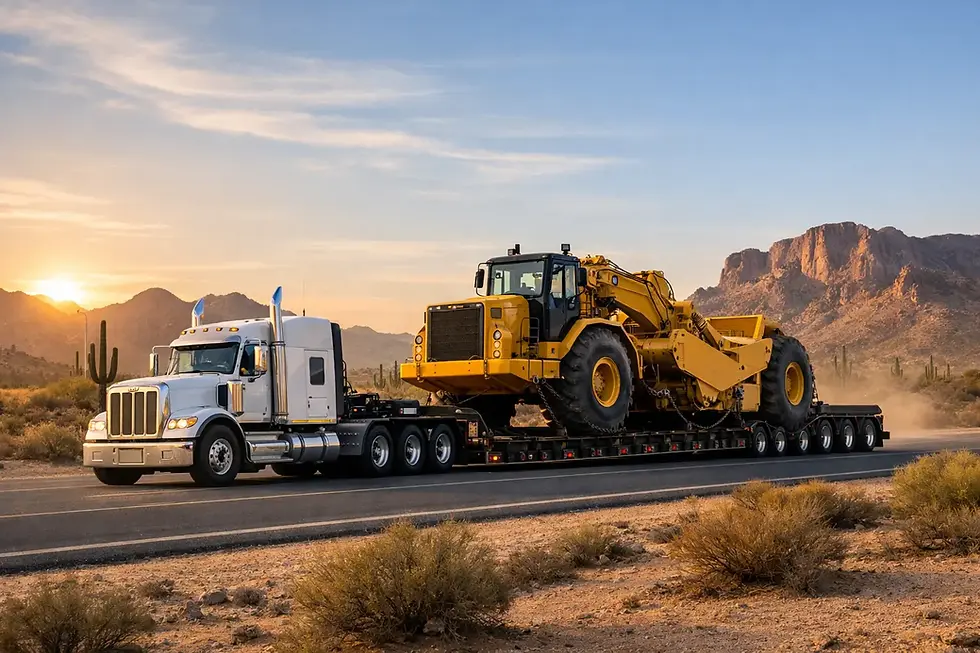
Not all heavy haul work looks the same. Some loads move on a standard lowboy. Others need a removable gooseneck, a Landoll, a step deck, or a multi-axle setup built for serious weight. If you want to move excavators, dozers, crushers, transformers, or oversized industrial assets, you need to understand what trailer type fits what load and why.
A driver trying to break into this field should spend time learning deck height, loading angles, axle spread, bridge law basics, and how trailer configuration changes permit options. This is where a lot of newcomers get humbled. Heavy haul is not just hauling something heavy. It is matching the right truck and trailer to the dimensions, weight, route, and legal requirements of the load.
That is also why experienced heavy haul carriers value drivers who pay attention during loading. A clean loadout is not cosmetic. It affects height, overall length, axle distribution, ground clearance, and whether the load can move legally through each state on the route.
The permits and legal side are part of the job
If you want to know how to get into heavy haul trucking and stay in it, learn the legal side early. Oversize and overweight freight runs on permits, approved routing, and timing restrictions. Depending on the dimensions and the states involved, a move may require escorts, route surveys, curfews, weekend restrictions, holiday restrictions, or special crossing instructions.
Drivers do not always pull the permits themselves, but they are still responsible for following them. That means reading the paperwork, knowing the route, understanding travel windows, and recognizing when field conditions do not match the permit. A bridge closure, construction change, or low wire can turn a legal route into a problem fast.
This is one of the biggest differences between general freight and specialized hauling. In heavy haul, the trip plan is part of the load. If the route is wrong, the job is wrong. Good carriers build systems around this. Good drivers respect those systems.
What it costs to get started
The answer depends on whether you want to drive for a carrier or build your own operation.
If you are coming in as a company driver, your upfront cost is much lower. You need your CDL, likely flatbed or specialized experience, and the ability to pass the usual hiring standards. This is the smartest route for most people because heavy haul has too many moving parts to learn the expensive way.
If you want to become an owner-operator in heavy haul, the cost jumps hard. Specialized trailers are expensive. Insurance is expensive. Permits, maintenance, tires, escorts, compliance, and downtime can all hit at once. A cheap truck and trailer can become a very expensive lesson if they are not spec'd correctly for the work. That is why many successful operators spend time driving for a specialized carrier before buying equipment. They learn the freight, the customer expectations, and the real costs before they put their own money on the line.
Choose the right first employer
Your first heavy haul job matters. Some companies truly train. Others throw a driver into the work and hope experience shows up on the fly. That is a bad setup in this segment.
Look for a carrier that runs its own equipment, has real specialized trailers, and treats permit compliance and load planning like core operations instead of paperwork. Ask what kind of freight they move, what trailers they use, how training works, and whether new drivers start with simpler loads before moving into more complex hauls. A company that regularly handles construction and industrial equipment usually has better systems than one that only takes the occasional oversized load when the rate is high.
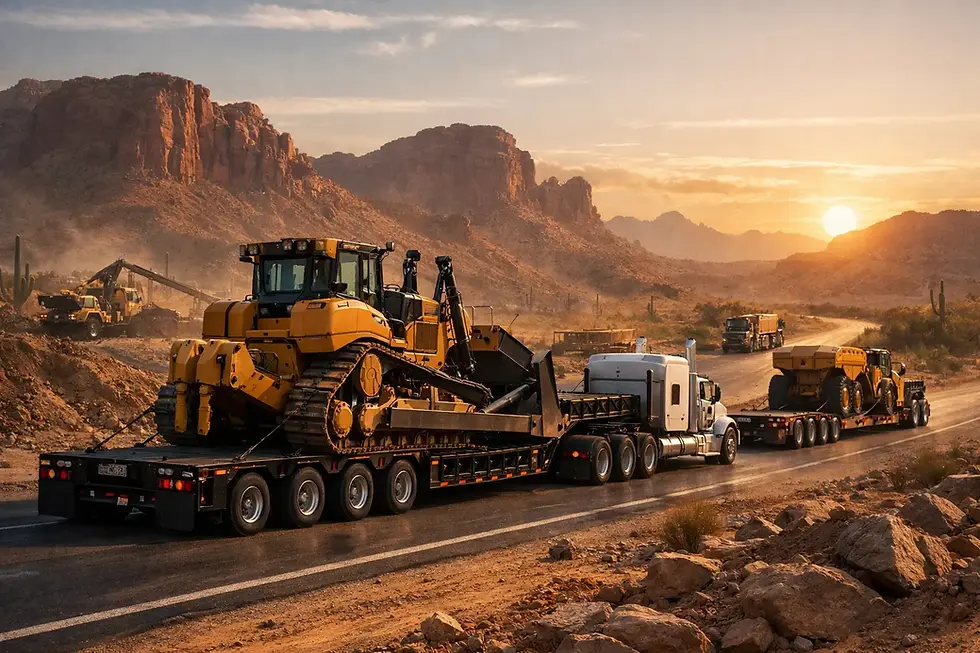
In markets like Arizona and Nevada, where construction, mining, and industrial projects generate steady demand for equipment moves, the right carrier can expose a driver to a wide mix of legal loads, over-dimensional freight, and route planning challenges without throwing them straight into the deep end.
Expect the work to be slower and more demanding
Heavy haul can pay better, but it is not easy money. The work is slower by nature. Loading takes longer. Routing takes longer. Pre-trip and securement checks take longer. You may sit for permit windows or travel restrictions. A job can look simple on paper and still require careful planning at every step.
That trade-off is part of the business. If you like speed and volume, standard freight may fit better. If you take pride in moving difficult loads safely and legally, heavy haul can be a strong long-term lane. The drivers who last in this segment usually like the technical side of the job. They do not mind the extra checks, the extra patience, or the pressure that comes with valuable equipment and tight schedules.
How to build a real future in heavy haul trucking
The best move is usually to treat heavy haul like a craft. Get the CDL. Learn flatbed if you have not already. Become excellent at securement and equipment inspection. Study trailer types, axle weights, and permit basics. Then find a specialized carrier with actual standards and learn under people who do this work every day.
There is no shortcut that beats good habits in this business. The drivers who move up are the ones who protect the load, respect the route, and understand that safe and legal is not a slogan - it is the job. If that kind of work sounds right to you, heavy haul is worth pursuing, and worth doing the right way from the start.

Comments